
We are very pleased to support the publication Accessing Records in Scotland, a new report which brings together findings about what it is like for people with care experience to access their records.
Researched and written by Aberdeen City Council, the Champions Board of West Dunbartonshire Council, The City of Edinburgh Council, Future Pathways, Social Work Scotland and Who Cares? Scotland, the report focuses on what people with care experience tell us about the Right of Access. It also makes key recommendations for how the process can be improved so that anyone who chooses to access their records in future can do so in a way that is safe and supported.
The Right of Access gives each of us the right to obtain a copy of our personal data from any organisation which holds information about us. Accessing records can be particularly significant to people with care experience: records can provide information about their past which would otherwise be unavailable.
This new report was made possible by participants with care experience who generously gave their time, knowledge and insights so that we might all gain a better understanding of how things are now and where changes need to be made. People described the deep personal significance of their records, that they contributed to forging, understanding and asserting their identities. It is essential, therefore, that services recognise why records are important to people with care experience.
It is also crucial that organisations understand how the process of accessing records can also have a serious impact. It is a significant decision for someone to choose to seek information about their time in care and the experience can be highly emotional at each stage, from the decision to make a request, to the process of receiving records, to reading them. People have described how important it is to feel informed, listened to, safe and supported throughout the process.
The process for people is significantly improved when there is good communication, access to support and full explanation from the record holders. It is essential that people are supported at each stage. The report aims to create a foundation for developing a consistent, trauma-informed, rights-based framework for anyone responding to Rights of Access requests.
Many people supported by Future Pathways seek support for record searches and it is consistently one of the most access forms of support from our Delivery Partners. We have supported over 750 people (around a third of people we support) to access their records by working with Delivery Partners, such as Birthlink and Wellbeing Scotland, who help to identify and find records, compile records, and support people throughout the process.
Future Pathways supports the recommendations made in this report. We believe accessing records is part of ongoing care; policy and practice must meet the needs of people with care experience. Clear and accessible information is essential – anyone who chooses to access their records must be supported to feel informed and empowered. We know that records can contribute to building identity and form part of the journey towards trauma recovery. Therefore, underpinning the process of accessing records must be a trauma-informed, person-centred approach that reflects choice, collaboration, trust, empowerment and safety.
We encourage all services, organisations and practitioners who are involved in working with people with care experience, record searches and trauma recovery to read this report. You will hear the voices of people with care experience throughout. Their insights into this key issue are fundamental in generating awareness, understanding and, ultimately, change.
You can view and download Accessing Records in Scotland from Social Work Scotland website here. Both a full report and shortform version are available. We encourage you to share this with your peers and networks.
Smyllum was an orphanage in North Lanark, where many children experienced abuse from the Daughters of Charity who ran the institution.
Each year, INCAS supports a memorial service for the deceased children of Smyllum and all children who have died while in care.
This year, the memorial service will be held on Saturday 3 August at 1pm, at St Mary’s Cemetery in Lanark.
If arriving early, some survivors meet in Valeros Cafe on the High Street before the service.
After the service, a light lunch will be provided. The venue for this will be announced at the end of the service.
INCAS welcome all who may wish to attend this private memorial. However, in order to provide catering on the day, please do let INCASE know if you are attending. Send a short message to Helen on 07960 993444.
Richard shares his wonderful poem about nature.
Why is life not like a chestnut tree?
The Chestnut Tree…
Forty feet tall branches scattered in countless directions,
even more Leaves of different size and
Shades of Brown and Gold.
The Strength and Power of time has made you
Strong and Beautiful.
Birds from the Blue Ocean above perch on carefully
chosen branches;
The Blackbird – Chaffinch – Magpie
Woodpigeon – and Starlings.
They all come to gossip about their families.
Bees hum, a Hoverfly examines a branch, Caterpillars crawl
carefully here and there, a Red Admiral flutters through
Branches wondering where to land trying to keep away from
all those predators.
All this Menagerie finds some shelter from the Rain and
Wind from this magnificent stature of Wood and Leaves.
All the Clouds but one moves away to somewhere else.
The gentle patter of Rain stops.
The Sun peeks from the side of
a ball of cotton wool to say,
“Hello, I’m here to bring Sunshine into your Heart.”
The Chestnuts, clusters of mace bet on each other to see
who will fall to the Ground first.
On the Ground, the Hands and Fingers of Roots are spread
over the Grass, Twigs and Stones.
The Air of Wind returns moving this gentle giant to and fro,
the Branches Crackle and Creak.
The Sunlight flickers through and between the Leaves
creating Shadow and Movement.
And then, and then, a Chestnut fell, bouncing off the Grass
just in time to be spotted by a Red Squirrel.
Its big bushy tail radiant from the Sun’s kiss.
Another fell, another bounced watched eagerly by the
others from the branches above.
Later on in the day the Sun flew away, a cloth of black
velvet sprinkled with diamonds graced us with its presence
admiring the tree.
The Moon cast its Ambient Light on Branches and Trees.
Silence fell. The Wind disappeared.
Silence, quiet, stillness.
Suddenly, a White Bird appeared, its Heart Shaped Face,
Its beautiful Dark Eyes its magnificent Wingspan landed on
A branch almost halfway from the ground, watching,
listening.
Behind this glorious creature are more Branches, more
Leaves and the Big Pearl of Light.
Chestnut Tree,
What have you seen?
What have you heard?
What do you know?
A whisper of answers gently fell into the air.
Why is Life not like a Chestnut Tree?
Future Pathways supported Chris to develop his skills in DJing. Here, he tells us all about his musical journey.
Chris first got into DJing in 1991 while living in Leeds. He first came across the music scene in 1988 when he took a trip to London. This is where he first listened to Centre Force, a pirate radio station that played 24-hour rave music. During this trip, he went to a warehouse party and this gave him his first proper taste of the acid house scene and rave music.
‘I loved the openness, the vibe, being able to chat to anyone in a non-judgmental environment. For someone who had been through trauma, it was a place where you did not have to explain yourself and you could just be free. It didn’t matter who you were, what you were wearing. Everyone shared everything with complete strangers.’
He later moved to Leeds and started buying records. He got introduced to a friend of a friend who had a slot on the local pirate radio station. Chris started hanging out at the station and at the after-hours blues clubs dotted around Chapeltown. He was then offered his own slot at the radio station and played at most of the blues clubs. He also played a couple of gigs at The Music Factory, one of the most well-known clubs in Leeds, known as the home of B2B Back to Basics.
‘It wasn’t just the music, it was the vibe that was intriguing to me. I got really into the underground side of the scene.’
Chris moved around a lot so ended up selling or losing a lot of his records and gave up DJing. But last year, he decided to get back to it.
By this time, the scene had moved from using vinyl records to digital equipment. So, Chris had to learn to use this new technology. Future Pathways supported Chris to develop his skills and access the tools he needed. Chris’s Support Coordinator at Future Pathways was there to guide him.
‘It has been a massive thing for me that someone is there and takes the time to listen. She gets my story. For me, it’s not just the service, it’s the connection with the person you’re being supported by. To have someone who is open and helpful in guiding you to the services that might help you, that’s the key thing.’
Chris was able to access new tracks to use in his mixes. He also had time at Pirate Studios in Edinburgh. This gave him the chance to practice using club equipment which gave him more confidence.
‘It has been great using the equipment and learning. It has been a great learning curve.’
Making music also boosts Chris’s mental health and wellbeing.
‘DJing has been such a healing thing. I get into my zone. I also love seeing people’s reactions to the music that I play. Having time away from everything takes my mind away from things that are going on around me. It takes you away because you can’t think of that while you’re doing something you have to concentrate on.’
Chris now has a weekly slot on Trax Radio UK. It is the oldest independent dance music station in the UK.
‘You do it from your own room but you are streaming it to the audience. It is a fab thing. It is an indication of how well DJing is going for me. If you weren’t any good, they wouldn’t have you on, especially on a primetime slot like a Friday evening. So that is really big for me, I am really chuffed.’
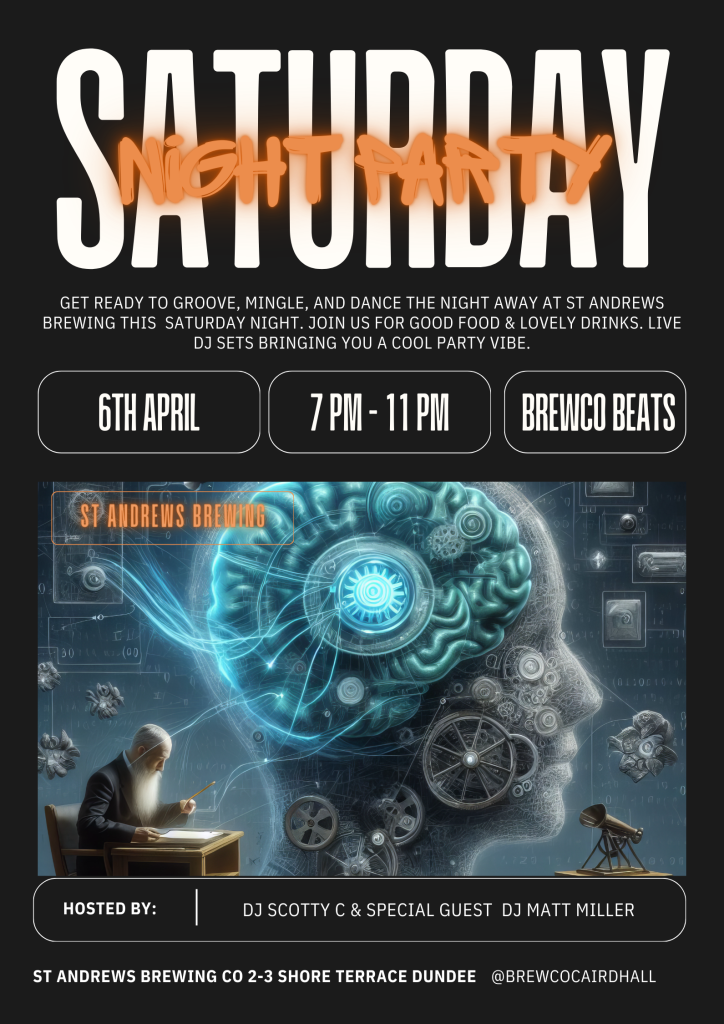
Chris also plays at St Andrews Brewing at Caird Hall in Dundee.
‘I got asked to do some sets before Christmas and they went down a storm. It was four hours long which was intense. But they loved it. And they’ve booked me now for the next few months.’

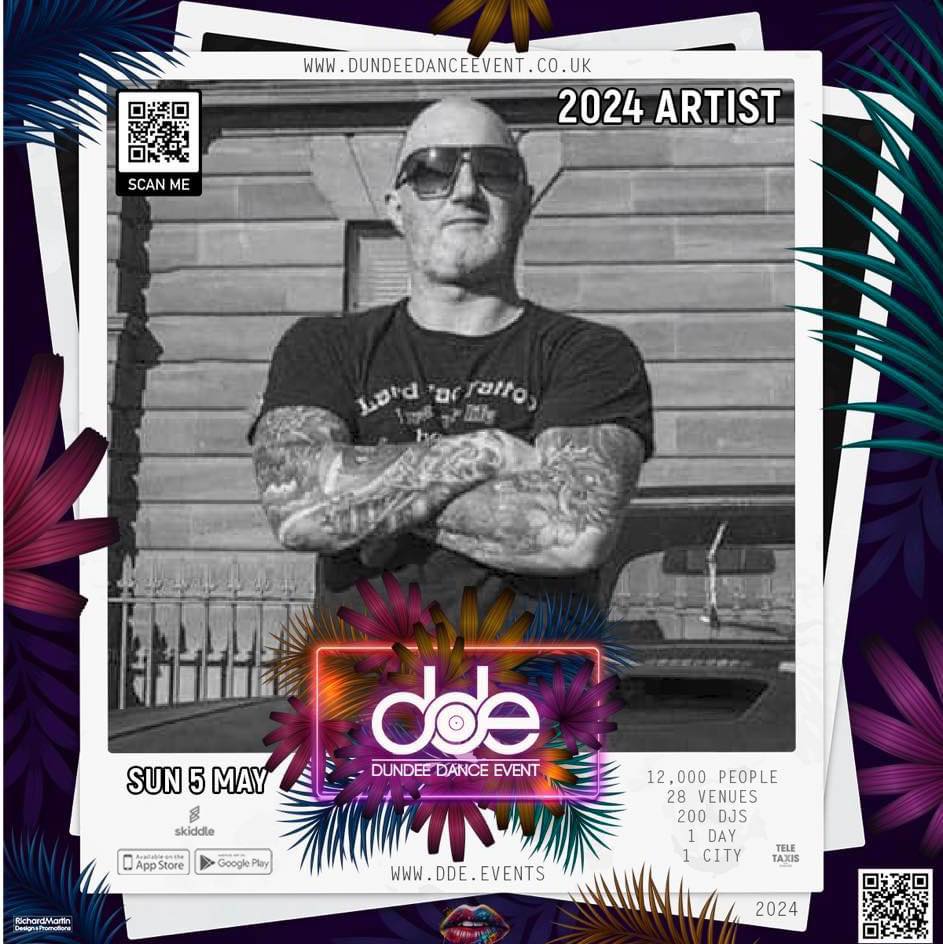
Chris also had an exciting trip to Dundee Dance Event in May. It was the largest event in the UK for up-and-coming DJs. This year, Chris had two sets there. He also has more events coming up.
‘I’ve been invited to go down to Stoke and play with legend Daz Wilcot and Awesome 3, who were a huge PA. I also have a gig at Dundee Pride in the dance tent.’
Chris has plans for his future too.
‘I’m a big fan of seeing people dance and seeing people happy. I hope to make contacts with clubs and get my music out there a bit more. It’s definitely getting there.’
You can listen to Chris’s music at: www.mixcloud.com/ScottyCDJ
Hear his slot on a Friday evening at: www.trax-radio-uk.com
See Chris’s instagram @scottyc_dj
Future Pathways supported Lauchlan with his writing. Here, we find out more about the books he has written.
Lauchlan began writing when he was about 23. At first, he wrote poetry. He found that writing poetry was a way to express his thoughts, both positive ones and negative ones. He then went on to write stories.
Lauchlan started working with Future Pathways last year and since then, we have supported him to write a book. He worked with The Book Whisperers to do this. For example, they gave him advice on how to lay out the storyline.
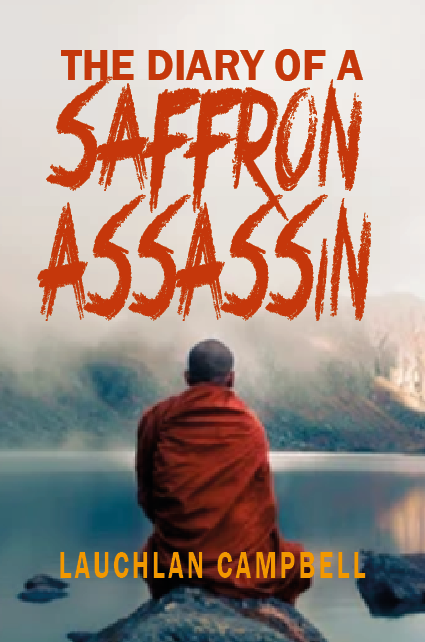
Lauchlan’s book is called The Diary of a Saffron Assassin. It is a made-up story, but Lauchlan added parts to it from his own life. The book follows a character called Loc, who forms a relationship with the spirit of a young girl. From this, Loc is spurred on to bring justice when he sees bad things happen around him.
Lauchlan says: ‘I found that working with the Book Whisperers gave me direction on how to lay out a storyline. What I enjoy most about writing is being able to put my thoughts on paper and what I find challenging is weaving an acceptable narrative.’
Lauchlan has also published a book called Shanghaied and Shackled. This is about his experience of being in prison in China. He is also working on a follow-up book to The Diary of a Saffron Assassin. This one will have a woman as the main character.

You can read two pieces from The Diary of a Saffron Assassin below.
“In the early morning at the fringes of the Thai-Cambodian border, I stood as a silent silhouette against a tapestry of travel and trade. The air hummed like a Buddhist Mantra with the wearied steps of those Cambodian traders returning to their homes. I could see their facial expressions that they couldn’t erase the horrors of the past, each carrying stories in their mind and weighted bags they clasped tightly in their hands. I also carried a load in the recesses of my tormented psyche – a history of violence and trafficking drugs, of prison in China – for crimes I did commit – and a childhood of silent screams. My depleted spirit ached for something good as it ran towards my future. Here, on this tattered edge of a land scarred by history’s cruel hand, I was hopeful that my pilgrimage of peace would sow the seeds of a brighter future. How wrong I was to be.’’
“Running over, Running over, My cup is full of Running over. This was to show that the spirit of the Lord had filled your soul – in my case, it spilled over into dark waters leading down the wrong path to redemption. I needed to be able to sit in silence away from the turmoil of daily life. I didn’t want the temptation with the availability of alcohol and drugs. It was my decision to extract myself from society, meditate, and keep a calm state of mind regardless of what situation I found myself in.
The next morning a gong echoed around the compound which was our sign to get out of bed. We all began walking to the meditation room and sat on the floor. The classes were held by an Indian teacher but he was not actually present, instead, it was recorded on tape. Sitting with my eyes closed I followed the instructions which was to watch the rise and fall of my breath so that my mind wouldn’t get caught up in other outward distractions and to always return to my breathing if it did. The voice of the teacher went on and on. The sound was disturbing and gave me a feeling of disorientation. What was I doing there listening to a recording that was coming from a machine – and why was it haunting me? I took a slow breath to control myself repeating ‘Om Mani Padme Hum’. A mantra that teaches you to transform your impure body, speech, and mind.”
Lauchlan has published two books so far. Both books are available on Amazon.
Search for ‘The Diary of a Saffron Assassin’ and ‘Shanghaied and Shackled’. Lauchlan has asked that people leave reviews of his books on Amazon.
Lauchlan has kindly given us 15 printed copies of The Diary of a Saffron Assassin to send out to people. If you would like a copy, you can:
• email us at engagement@future-pathways.co.uk
• call us on 0808 164 2005 (lines open Monday to Friday, 10am to 4pm)
Please note that the book does mention some instances of abuse.
Being in nature can boost our wellbeing. Here, we share top tips from First Psychology.
Growing plants at home
Taking care of plants can help you feel peaceful and give you a sense of pride. You do not need to have a garden to feel the benefits of growing plants. There are lots of plants that you can grow in your own home to create your own little garden.
Choose a room in your house that gets a lot of sunlight coming in.
• Gather some pots, soil and seeds and you are ready to start.
• You could also go to your nearest plant shop and ask for advice on what to grow or buy a plant or two from there to start you off.
• The best plants to grow inside are leafy green plants or herbs. Or you could grow a cactus as they are easy to look after.
• You could even try growing basil, rosemary, sage, pea shoots, cress or even small chilli peppers.

Spend time with animals
Being around animals can help reduce stress. Even if you do not own a pet, you can still spend time with animals. For example, if a friend owns a pet, you could look after it for the day, or you could join them for a walk in the park. You could also visit an animal shelter or a nature reserve if you live near one.

Listen to the sounds of nature
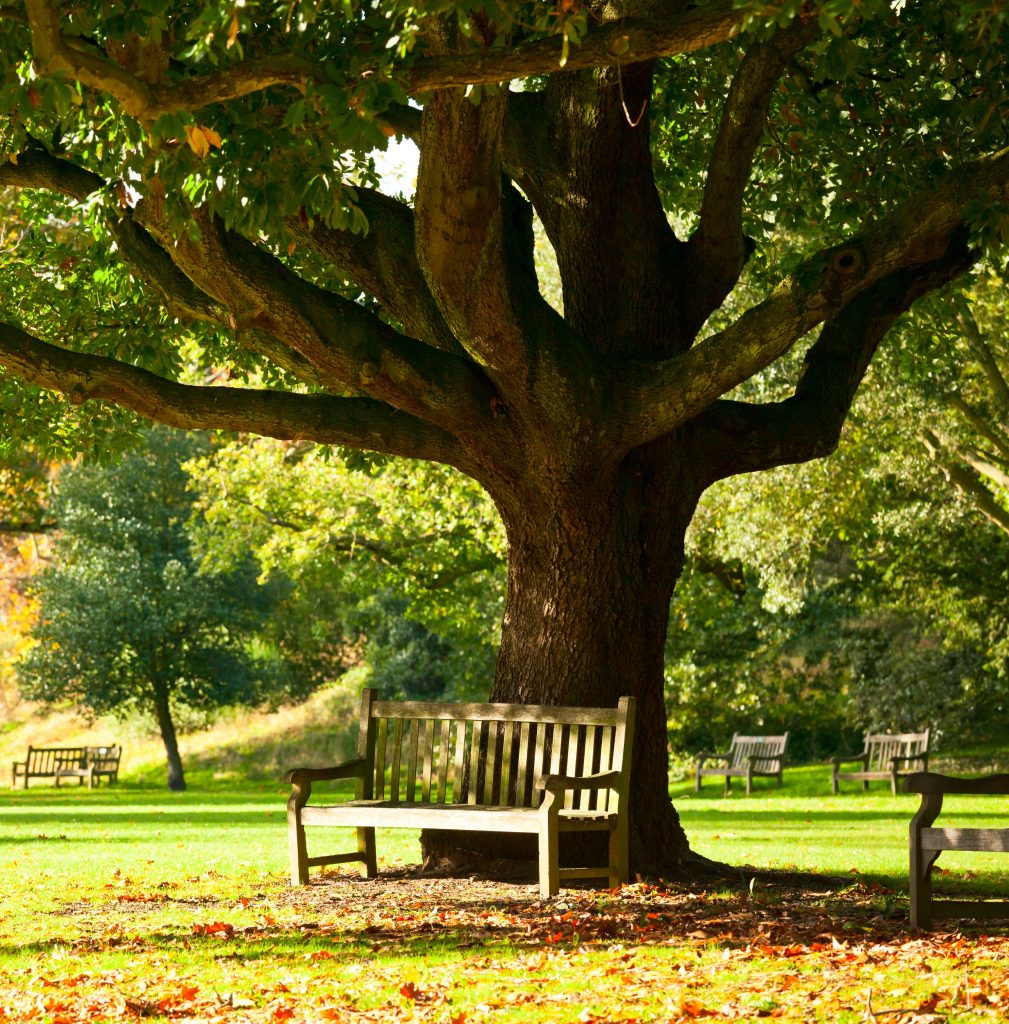
We often do not notice all the natural sounds going on around us. Taking time to sit in nature and focus on these sounds can be a good way to relax. Try to find a quiet spot to sit. This could be a garden, a park or another place close to nature. Sit in silence and focus on each different sound you can hear, one at a time.
For example, the birds singing or wind in the trees. You could even write the sounds down. If you are not able to get out into nature, you could try listening to a recording of nature sounds instead, like birdsong or rain. You can find recordings of nature sounds online.

Take nature screen breaks
In our modern lives, we often spend a lot of time in front of screens, like our phones. If you use your phone a lot, you could try to create a new habit. For example, putting your screen down regularly to look out the window and up at the sky for few minutes, or by making sure you put your phone away when you are outside.
Taking breaks from our screens to enjoy nature and the outdoors is an easy way to find a more balanced lifestyle. We also get the positive impact that nature can have on our overall wellbeing.
Take part in activities that help look after nature
There are lots of things you can do to help protect and restore natural places. Taking part in these activities can help us feel connected to our natural world and feel a sense of purpose.
Find out what activities are going on in your local community. There are often group activities that anyone can get involved in. They are often run by volunteers and very happy for new people to come along and join in.


This article is adapted from a booklet called Eco Therapy and Wellbeing written by First Psychology. First Psychology are one of our Delivery Partners. They offer different kinds of therapy, like counselling, psychotherapy and coaching. They are based in Edinburgh but they have offices in lots of places.
You can find out more about them at www.firstpsychology.co.uk
You can see the full booklet at: www.firstpsychology.co.uk/booklets
Earlier this year, Future Pathways helped David to get a mountain bike to support him with his mental and physical health. Here, David shares his cycling stories and what the bike means to him.
David has always loved cycling and has done it all his life. He raced when he was younger, and cycled across Europe and America. It was important to him to keep up cycling as he got older.
Future Pathways supported David to get a pedal-assist bike. This type of bike has a motor to help you pedal more easily. This is very helpful when it comes to hills.
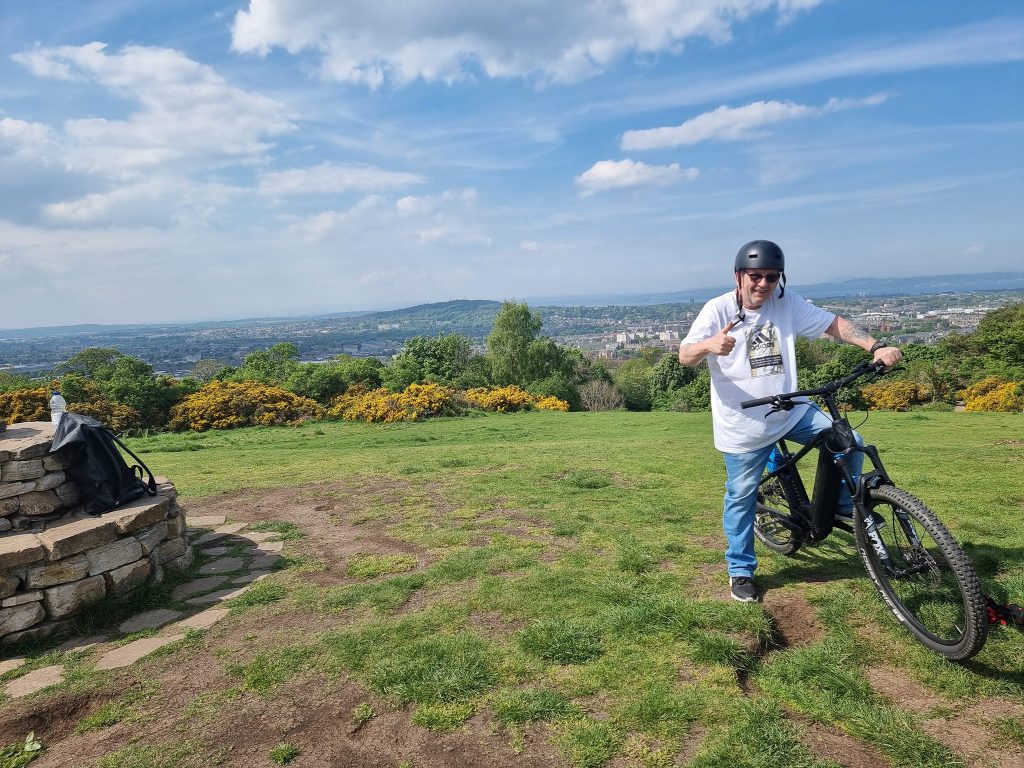
David goes to different places in Scotland and sees lots of scenery on his travels.
‘Where I live is ideal – I am surrounded by cycle paths and cycle networks, Edinburgh is great for it. I’m quite fortunate in that way.’
He has cycled in the Pentlands, Aberlady, North Berwick, Longniddrie, Glen Tress and the Cairngorms. He usually goes by train and then cycles back home. He recently went to Falkirk by train and then cycled all the way back. This was a 35-mile route along the canal and took about 4 and a half hours. His longest cycle was 105 miles, to Hawick and back.
‘You don’t think about the distance. you just carry on. I am out in hail or shine, it doesn’t bother me. Usually I am out every day.’
David looks at the cycle networks online to help him choose his routes. If he likes a route, he thinks about when he will go and for how long. He recently spent a weekend up in the Pentlands with his friend.
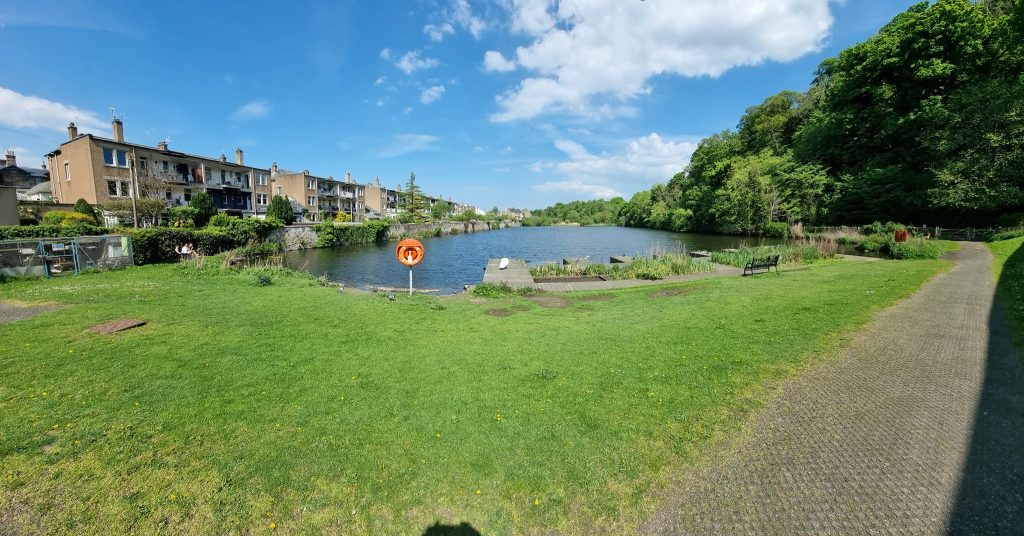
‘My favourite is up the Pentlands, it’s nice up there. It’s like being in the middle of nowhere even though you’re in a city. Me and my pal camped a couple of nights on Bonaly Hill and it was nice. Having that freedom to go where you want. Me and my pal do quite a few cycle trips. We are both bike mad.’
There are lots of things David enjoys about cycling and he knows a lot about bikes.
‘I like the mechanics, physical exercise and just getting out. It is a mixture of things. I volunteer at the bike station in Edinburgh fixing bikes for people or taking parts for new ones.’
Cycling means a lot to David. A couple of years ago, he had to sell his bike and this was difficult for him. Having a bike again has made a big difference.
‘It has been absolutely massive to my physical and mental health. I go everywhere on the bike. I’ve got a bus pass but I’d rather cycle. I don’t have to worry about anyone else.’
One of David’s most memorable routes was going out to Aberlady and cycling along a path that goes all the way to North Berwick. And for the best scenery, David’s favourite places are further north.
‘It has to be the Cairngorms and the Highlands. They are my favourite places any time of year. It is just so brilliant up there, it is spectacular.’
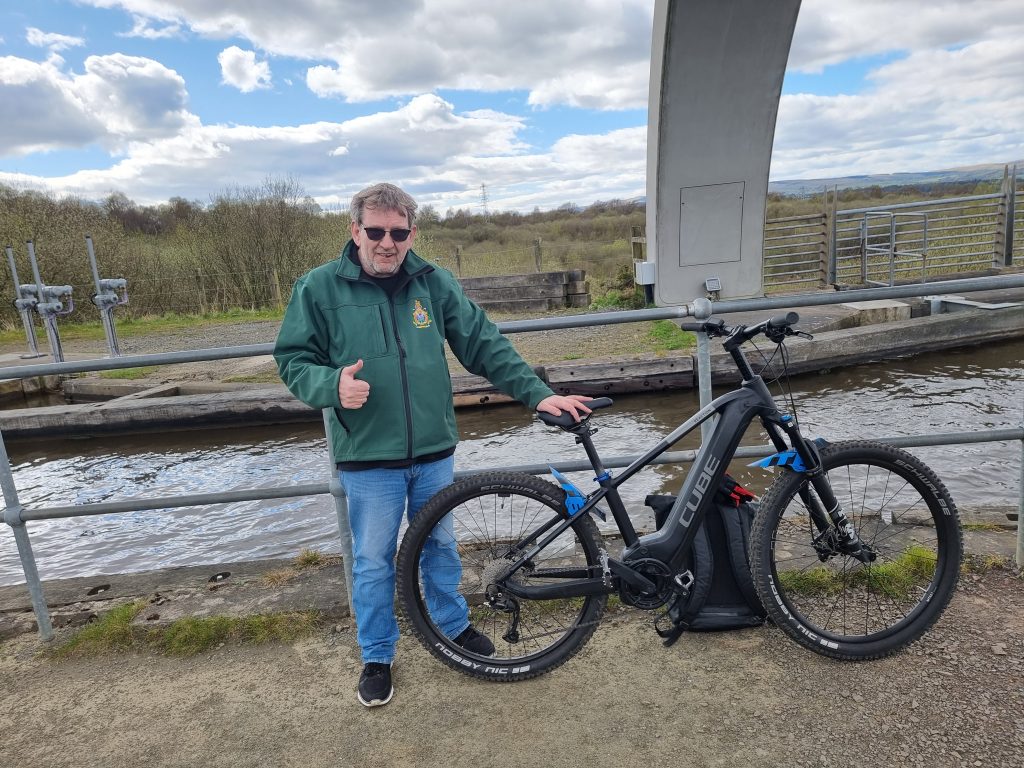
Having the bike means David can connect with local places too. He often cycles to Fresh Start, a charity that he volunteers with in Edinburgh. Fresh Start helps people who have been homeless.
‘Sometimes I’ll go down to Fresh Start and give them a hand or help with the soup kitchen. I worked for Fresh Start in the past and now I volunteer. It is good for the soul.’
What trips are ahead for David? Next year, he is going to Australia to see some of his family. He will see his sister who he has not seen for 20 years and he will meet his nephews too. David is going to take his bike with him.
‘There is some amazing cycling to do out there in Australia. I’m looking forward to the openness, the wild open country, it’s such a big place.’
In the meantime, David will use his bike to support his physical health, boost his wellbeing and to see more places in Scotland.
‘Cycling helps with my mental health. If I’m feeling under the weather, I’ll go on my bike for an hour and I’ll feel OK after it. The bike is everything to me. I wouldn’t be without it.’
The National Cycle Network is a UK-wide network of signed paths and routes for walking, wheeling, cycling and exploring outdoors. Find your route here:
www.sustrans.org.uk/national-cycle-network
We are pleased to share our latest report, Identity, Equality and Access: Learning about people we support. The report focuses on the demographics and life experiences of people supported by Future Pathways.
Through this research, we aimed to learn more about whether the population of people we support is representative of the wider population of people who have experienced childhood abuse and neglect. We believe that by learning more about this, we can make our support more accessible, both to people we support and people who have not yet registered with us.
Limited research has been undertaken about the demographics or life experiences of people who were abused or neglected in the Scottish care system. Future Pathways is one of the few services in Scotland exclusively supporting people with lived experience of in-care abuse and neglect. Although there are obvious limitations to our data set, we believe that this research is a valuable contribution to a currently under-represented area of research.
Identity, Equality and Access offers a starting point for services, including our own, to improve awareness about people who experienced in-care abuse and neglect. In addition, we hope this work prompts reflection from Future Pathways, our Delivery Partners and colleagues across the wider sector in how we can enhance access to support by considering people’s specific needs.
We are keen to consider how information people share can be leveraged to influence wider positive change in response to the impacts and inequalities of childhood trauma. Many people we support are keen to effect change, not just at Future Pathways but also to services and policies beyond. Gathering data and sharing our learning can help improve our own service and other services, enabling people to enact their rights to access the resources, care and support that is right for them.
This project has given us the opportunity to consider how we gather and record data, and how we can do this in a way that best suits the people we support. We encourage services to take a trauma-informed approach to data gathering and recording, acknowledging the specific needs or concerns that people with lived experience of in-care abuse and neglect might have in relation to their information and identity.
This research is part of a learning journey. We will continue to analyse the demographic and life experience data shared by people we support, and we will share our learning as our collective data increases. We remain committed to raising awareness and contributing to research that can benefit people with lived experience of abuse and neglect in the Scottish care system.
WHAT WE LEARNED
For example, we might not be reaching people who are transgender, people who are bisexual, gay, or lesbian, and people who belong to Black, Asian and mixed ethnic groups.
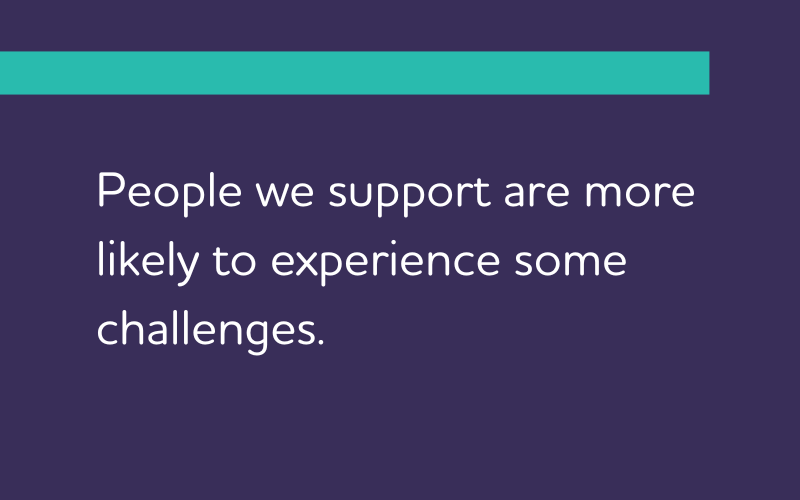
At least 15% of our respondents had difficulties with literacy. 74% of people registered with Future Pathways living in Scotland, were living in some of the most deprived areas. In the wider population, over a third of people who experienced childhood abuse by a family member were also abused by a partner as an adult.
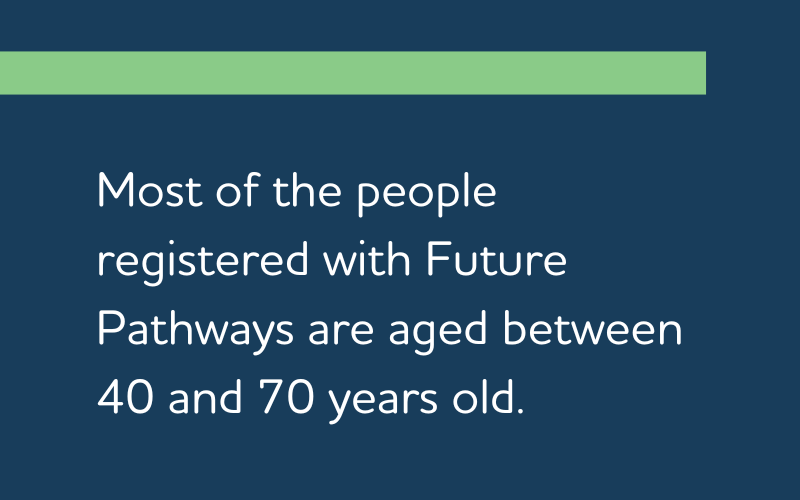
People registered at Future Pathways were aged between 19 and 93 years old, and the average age of people registered with Future Pathways was 52. In the wider population, more older people disclose childhood abuse than younger people.
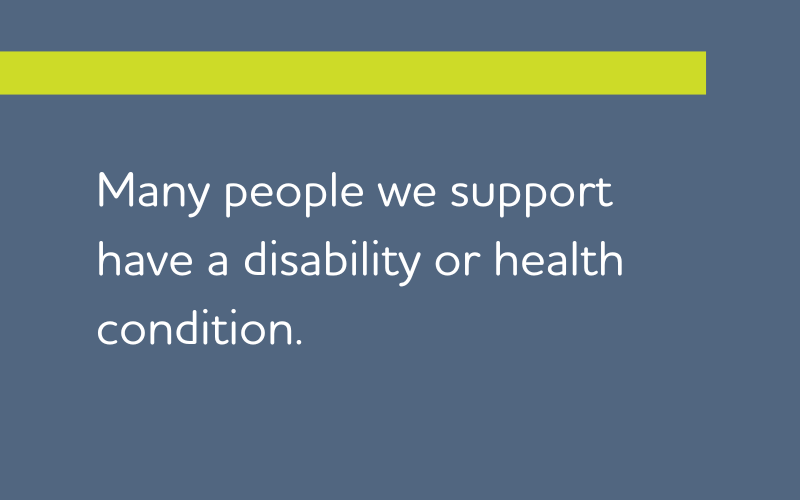
At least 48% of our respondents had a disability. In the wider population, people who experienced childhood abuse are at higher risk of anxiety, depression and psychiatric conditions.

Fiona Sharp founded F Sharp Music in 2013. It provides individually designed music sessions for people of all ages and disabilities. F Sharp Music are one of our Delivery Partners. Here, we chat to Fiona about her work.
When did your love of music start, and how?
Music was very much part of my upbringing, and I was always interested in it.
As a teenager I was very keen on drama and music and I was a member of the National Youth Music Theatre as well as local drama groups in Edinburgh.
Classical music has always been a big part of my life. I learned classical violin from the age of seven, and piano when I was three thanks to my mum being a piano teacher. Singing was also a big part of my childhood.
What gave you the idea to use music as therapy?
In my final year at school, I ended up shadowing the music therapist at The Royal Blind School in Edinburgh. That’s really what inspired me to go down this path and I ended up studying music down in London: it was a general music degree, but I was able to do a course in music therapy, and that inspired me further to look at taking it forward as a career.
I moved back to up Scotland, to Fife, and I ended up working as a Music Practitioner for a charity called Sense Scotland. I worked in their residential services across the east coast of Scotland providing one-to-one and group music sessions.
At that time, they predominantly supported people who are Deafblind. The majority of clients I worked with at that time had been in long-stay hospitals most of their lives, and had only recently moved into the community. I absolutely loved this work, mainly because the participants communication skills were fairly nonexistent at that stage, and I found that music and vibration really helped develop those skills. It was amazing to see the developments made through music however big or small they were. Following this I ended up doing a diploma in Deafblind Studies.
I worked with Sense Scotland for over six years and loved it. But by that point I was nearly 30 and felt I needed to move on and explore other opportunities within the sector. So that’s when I decided to take the big jump and set up F-Sharp Music.
So you started F Sharp in 2013: how has it developed since then?
It’s grown a huge amount, and I have to admit the growth in the business has been partly thanks to the pandemic. Before the pandemic I was working entirely on my own. Due to the high demand in music sessions over the past two years I have had to bring in four music specialists to help take on referrals. This has also meant that we are now covering many regions of Scotland rather than just Fife and Edinburgh as well as supporting people with a wide range of learning and physical disabilities, and all ages.
Over the past two years we have also set up an online shop selling F Sharp Music resources, sensory instruments and merchandise. We have a YouTube channel and social media pages.
What sorts of things do you do?
It very much depends on the person as we structure our music sessions around the individual we are supporting. We can do something as basic as sing songs together or interact with some percussive instruments, or we have some participants that want to learn to play an instrument, record themselves or be in a band.
We can use the conventional way of learning to play an instrument and learning to read music. But also, for those participants who may struggle to understand music notation, we use a system called Figurenotes. This is a system that uses colour and shape to help you learn to read music. So, for example, if you’re learning to play the piano or the guitar, you put stickers on your instrument – in different shapes and colours – and then the music is also portrayed in the same range of colours and the shapes, and you literally play what you see. So straightaway, you can play a song.
It was devised in Helsinki by two music teachers at the Resonaari Music Centre, who provide music lessons for children and adults with learning and physical disabilities. Originally Figurenotes was designed for people on the Autistic Spectrum, but it is now a music notation system which anyone can access.
The organisation Drake Music Scotland brought the concept over to Scotland in the mid 2000s, and it has just exploded as a music notation system throughout Scotland and the rest of the UK. Schools use it across the country and the BBC’s Ten Pieces school program also has adopted the system. It’s an amazing concept which works in three stages allowing the musician to eventually learn conventional music notation.
What are some of the ways that music can help people, beyond simply being an enjoyable experience?
There are many, many ways music can help people. It obviously depends on the person and their specific needs. For example, for people with more profound disabilities, who may have difficulties with communication, music can really help develop those skills through call and response work and choice making. You can also build up a conversation through instrumental playing.
For people who may have anxiety or depression, music can really help with self-expression and creativity as well as helping to build up confidence and social skills.
It can also develop counting skills, motor skills, listening skills and concentration. If you use Figurenotes notation system, you’ve got colour matching and pattern recognition as well as counting and rhythm.
Music can also just be a ‘feel-good’ activity.
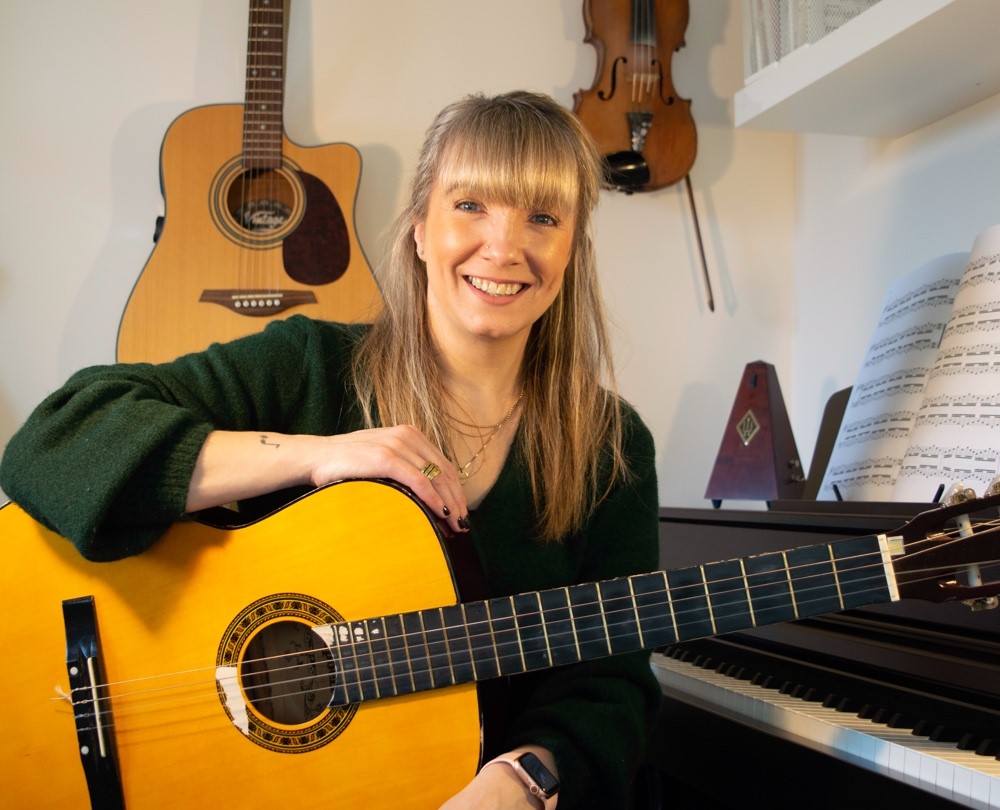
Above: Fiona Sharp
Where do you want to take F Sharp Music in the near future?
Well here’s the thing, when I was at school I was told by my careers advisor that music to me was a hobby not a talent and I should consider working in a shop instead of studying music…I didn’t listen to her! When I did go and study music at university I was then told that being a music specialist/therapist would always be a part time job as it’s very difficult to get work in this field. Somehow over the past 17 years I have built up my own music practice and now have a team of amazing music specialists covering large parts of the country, which I never thought would be possible given what I was told in the past.
I suppose that’s a lesson for all of us: go with your gut instinct and your love and passion for what you enjoy doing, and don’t let anyone stop you or put you off achieving your dreams. With that said, I can only wish for a future for F Sharp Music which is as successful as it has been over the past 11 years. I am always looking at ways of expanding the business and bringing in new ideas and interests. Our latest project which we are aiming to start launching next year is our Music Wellness sessions and resources.
This will hopefully include sound therapy/sound baths, music relaxation, sensory music and nutrition and wellbeing which is another area I am very passionate about.
Sound therapy/sound bathing uses different tones and pitches to help relaxation. The person is in a comfortable and relaxed position either lying down or in a comfortable chair. The sound therapist will then play a selection of instruments (crystal singing bowls, Tibetan singing bowls, ocean drums, rain sticks, gongs, finger cymbals) which produce very pure tones and relaxing sounds, and can completely relax you and help you process some of the emotions you might be experiencing. For some people it can put them into a meditative, trance state. I actually tried it myself a few weeks ago, and it was unbelievable. Until you experience it, you can’t really explain it, but you feel so relaxed at the end of the session, as if you’re walking on air. This is a great activity for people who may have anxiety, depression, Autism, or sleep insomnia. I personally think it’s a wonderful thing to experience and I very much want to introduce it as an activity to F Sharp Music over the next year.
5 skills that can be developed through music
Motor skills – by learning to play an instrument.
Language and communication – both through singing and by stimulating the necessary parts of the brain.
Collaboration skills – by singing and playing with other people.
Maths and counting – from beats in a bar to patterns within a piece, numbers are a fundamental component of music.
Self-expression and creativity – music is the perfect medium in which to explore and experiment.
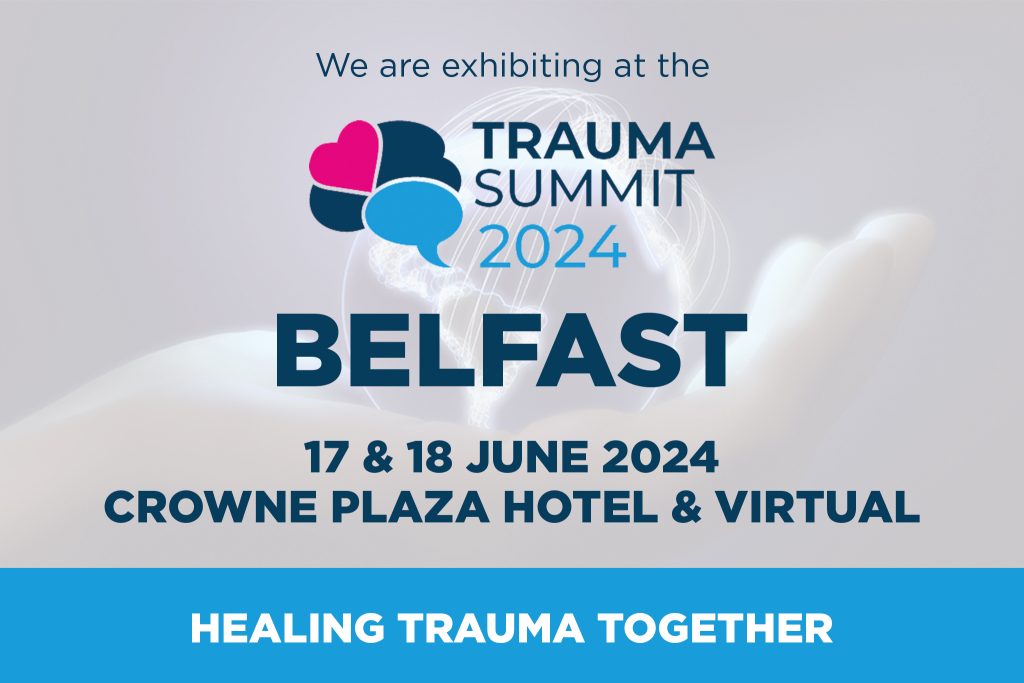
We are looking forward to attending Trauma Summit 2024. At this year’s event, we will have an exhibitor stand and virtual booth where professionals and services can find out more about who we are and what we do.
At Future Pathways, we take a trauma-informed approach across all our work. We are therefore pleased to be able to access Trauma Summit’s diverse and inspiring programme so that our staff can deepen their understanding of psychological trauma and trauma recovery from leading world experts.
By participating as an exhibitor at the Trauma Summit, we can make new connections and share our work with delegates from across a range of services and professional backgrounds. We look forward to highlighting the ways in which our trauma-informed approach is crucial in contributing to positive changes in the lives of people we support.
We are committed to our learning journey. We seek to strengthen our own individual and collective knowledge through events such as Trauma Summit. We are also keen to share our own learning with peers and demonstrate how compassionate, flexible support can make a real difference.
“Future Pathways exists to enable people who experienced childhood abuse or neglect in care to live well, supporting people to achieve their life goals. Many people face significant barriers when services and professionals are not able to offer a trauma-informed response. Each person’s needs are unique, and we are determined to keep learning how we can offer individualised support of the highest quality. By participating in the 2024 Trauma Summit, we can develop our own practice and share our own learning about delivering psychologically informed support.”
– Flora Henderson, Alliance Manager, In Care Survivors Alliance